 For those of us working in higher education fundraising, the issue of student debt has an increasing amount of relevance. The Project on Student Debt through the Institute for College Access and Success writes, “Over the last decade—from 2004 to 2014—the share of graduates with debt rose modestly (from 65% to 69%) while average debt at graduation rose at more than twice the rate of inflation.” How can we expect our young alumni to give back to our institutions when they can barely make their loan payments?
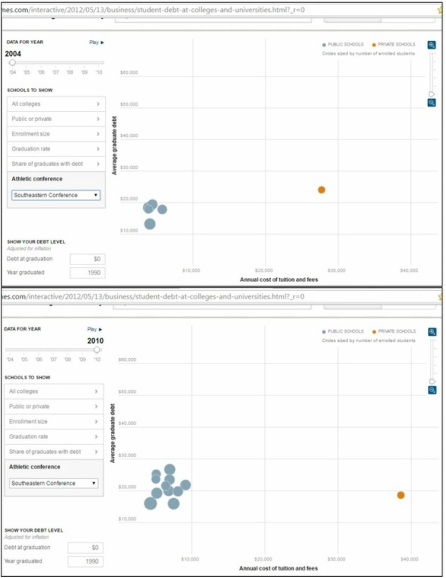
Many in society are questioning whether a college education is good investment and the view of college is shifting to one that is transactional, rather than transformational. Not only should advancement professionals stay up-to-speed on these issues because of how it may affect the way young alumni give (or don’t give), but we should also utilize this as an opportunity to put out positive messages about how philanthropy can mitigate this situation for scholarship recipients. There are great resources available that track this information. The organization cited above (The Project on Student Debt) collects data from most colleges and universities and reports it online. You can access overall statistics, historical trends as well as data by state and by institution. With a little bit of research time, you can learn how your institution compares with peer institutions and with other institutions in your state. You can also see how the trends have change over time. The historical reports are a bit more difficult to find so here are links to the reports for 2011, 2012 and 2013. 2011: http://ticas.org/content/pub/student-debt-and-class-2011 2012: http://ticas.org/content/pub/student-debt-and-class-2012 2013: http://ticas.org/sites/default/files/legacy/fckfiles/pub/classof2013.pdf Another great resource for geeks like me is this interactive graph from the New York Times. I love this resource because it lets you see how the trends with student debt change across time and you can see how the cost of tuition has risen. You can break it down by all different kinds of criteria. For instance, here’s the some data for the Southeastern Athletic Conference for 2004 (top graph): Notice how low nearly all of the schools are in terms of both cost and student debt (blue dots). The only outlier is Vanderbilt (orange dot), which had slightly higher debt loads but was much more expensive. The expense is not surprising since it’s the only private school in the SEC. Now take a look at the 2nd graph. It’s the same data for the same schools 6 years later. At the University of Georgia in 2004, the annual tuition was only a bit more than $4,000 and the student debt was around $13,000. By 2010, tuition at UGA was over $7,500 and the average amount of student debt was now almost $16,000. There’s a totally different story at Vandy and it’s completely counterintuitive. In 2004, the average Vandy grad carried over $24,000 in student loans. The cost of an education was almost $28,000. The cost to attend Vandy rose to over $38,000 in 2010, but the average amount of student debt DECREASED to $18,600. How could this be? The answer is obvious: philanthropy. Vandy must have raised and awarded more scholarship during this 6-year period. So, charitable giving can make a marked difference in the future of an average student where debt is concerned. Why are we not writing this into each single phonathon script and direct mail piece that we produce in higher education fundraising? I encourage you to play around with these tools and do some research into the trends at your own institution. You can then build statistically relevant objection responses for alumni who say they cannot give due to student loan debt loads and more importantly you can more effectively market the potential positive impact that major donors can have when they make a gift for scholarships.
0 Comments
In-Depth: The Top 3 Reasons Why Recruitment should be the #1 Priority of a Phonathon Manager6/15/2016 1. Without callers, you don’t have a phonathon. This seems obvious but it’s true that the only 3 things you really need to have a phonathon are:
2. Without the right callers, you don’t have a successful phonathon. You could put anyone in the chair and that’s better than no fundraising at all, but to succeed in this medium, you need talented, well trained callers. By spending enough time understanding your staffing needs and then recruiting aggressively and early, you’ll have enough applications to be selective and you’ll have plenty of time for a thorough training program. 3. It’s annual giving so you only have 1 year for this campaign. What are you waiting for? At the end of the fiscal year, your tally for dollars and donors goes back to zero. Unlike other types of fundraising campaigns (building campaigns for example), annual giving hits the reset button like clockwork, annually. Staff up fully and quickly to get a jump on your goals. Keep in mind that outside of credit card gifts, your prospects need 30-120 days to fulfill their gifts. Because of the fulfillment cycle of phonathon, at a certain point in the year, it is nearly impossible to “catch-up”. I know I have implied recruitment is the most important thing you can do as a phonathon manager. Perhaps I could more accurately characterize it as the most urgent. The most important thing you can spend time on is retention. Retention is the only activity that might be more important than staffing in managing a phone program because combating turnover puts your job and your phonathon into a positive upward cycle of improvement. Retaining those veteran callers saves you recruiting time and training hours. This works well for your budget but even more importantly, it frees your time to do the important work of statistical analysis that will take your results to the next level. It enriches your staff by building a community of callers and over time they build critical experience which means they make calls of a higher quality. 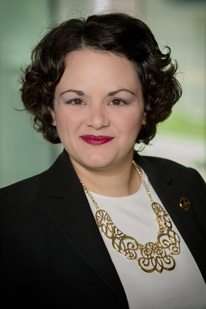 Welcome to Real Deal Fundraising!
I started this blog to share lessons and reflections on the profession of fundraising. My goal is to share practical tactics and training information for you to grow your career in fundraising and best serve the institutions where you are employed. Here's an overview of the weekly features I have planned: Motivation Mondays - Content to get you re-energized about being a fundraiser Tuesday's Tip - Work productivity hacks In Depth Wednesday - A "deep dive" into one fundraising training topic Thoughts for Thursday - My reflections on some big picture issue in the non-profit and philanthropy world FUNdraising Friday - Memes, Funny videos and other ideas to keep all you fundraisers smiling For my In Depth posts, I want to start by posting content to help phonathon managers. I think phonathon is an area where people enter into the world of development and often there is little training provided for these newbies. It turns into a "sink-or-swim" environment. I hope that this blog will be a life jacket to help new phone managers stay afloat and grow into productive development professionals. But in my other weekly posts, I'll be touching on everything from annual giving to planned giving and from donor relations to travel planning for major gift officers. My career started in phonathon, as a student caller my freshman year of college, and it is close to my heart. I have since worked in nearly every area of development and currently serve as Vice President for Advancement at Starr King School for the Ministry. I am a Certified Fundraising Executive who has worked in fundraising for nearly 17 years (12 of that full time). I worked with RuffaloCODY (now Ruffalo Noel Levitz) and the University of South Carolina for five years, and then returned to my alma mater (the University of Southern Mississippi) to administer a comprehensive annual giving program. In one year, we increased the total dollars raised by over 300%, and in three years we increased the number of first-time donors by 285%. During my tenure, the total number of yearly donors to the USM Foundation increased from about 3,000 to over 8,000. In 2012, we launched the first faculty-staff giving campaign for USM, and employee giving rose from 10% to over 32% in three months. I am the real deal! I hope you'll sign up for my mailing list and join in the conversation here. Thanks for visiting this blog! I hope you'll come back often. - Jessica |

Jessica Cloud, CFREI've been called the Tasmanian Devil of fundraising and I'm here to talk shop with you. Archives
July 2020
Categories
All
|
 RSS Feed
